
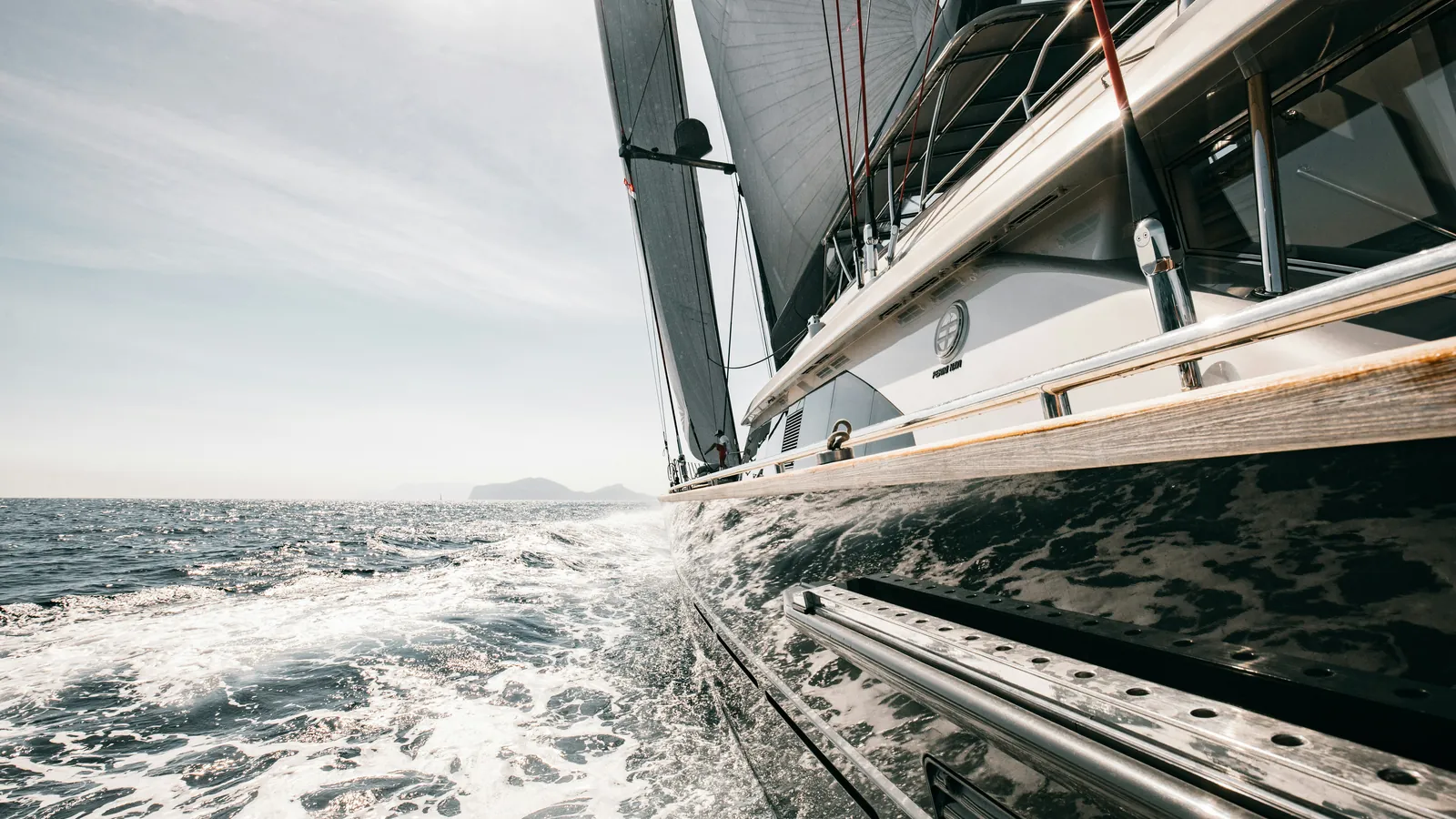
Monohull passage planning and weather
A monohull reads the weather differently than a catamaran. Its heel, slower speed, and deep rolling motion change which conditions are comfortable, which are workable, and which to wait out.
The passage-planning factors don't change (wind, seas, squalls, window length, fuel, model convergence), but their weighting does. This page covers where a monohull is more sensitive and where it's more forgiving, how to read sea state for rolling, and a pre-departure checklist tuned for a monohull.
Five ways a monohull changes the weather call.
Same factors as any passage, just weighted for ballast, heel, and lower speed.
- Heel spills the gusts: A monohull leans to a gust and depowers itself, so wind spikes arrive less abruptly than on a catamaran that doesn't heel. That gives a well-handled monohull room to carry on in gusty conditions whereas a catamaran can easily be overpowered if reefing isn't done promptly.
- Lower speed means a longer window: A cruising monohull usually averages less speed than a comparable multihull, so it spends more forecast hours exposed to the weather and has less ability to outrun a building system. Plan for a longer window with more margin. The passage simply takes more time on the water.
- Beam-on rolling is the comfort killer: A monohull's motion is a deeper, slower roll. A swell on the beam, even a long-period one, sets up the side-to-side roll that wears crew down and throws gear around. Swell direction relative to your heading matters as much as height.
- It points and punches upwind: Most monohulls work to windward better than cruising cats and carry their way through short chop on momentum. Wind forward of the beam is more workable, so an upwind leg a multihull would avoid can still be a reasonable monohull passage.
- Ballast carries through chop: Heavy displacement and a deep keel let a monohull push through short, steep seas, and with no bridgedeck to slam like on a multihull. Short-period chop costs you boat speed and comfort rather than pounding the structure.
For a monohull, watch the roll and the chop.
The useful sea-state check is still the ratio of wave period (seconds) to wave height (feet), but for a monohull the bigger comfort question is which way the swell runs. Two forecasts with the same height can be very different passages.
| Height-to-period | Example | What the ride feels like |
|---|---|---|
| ■ Short period ≈ wave height | Steep, stacked chop. The boat hobby-horses, slows, and throws spray. It is wet and tiring, though the hull is able to take it. | |
| ▲ Period ≈ 2× wave height | Workable. The boat keeps moving; motion is noticeable but manageable for most crews. | |
| ◆ Long period ≥ 3× wave height | Smooth, well-spaced swell. Comfortable, unless it's square on the beam, where even a gentle swell rolls the boat. |
Then check direction. For a monohull a swell on the beam can be very uncomfortable. It rolls the boat even when the numbers look mild. Seas forward of the beam or on the quarter ride better, and a separate swell crossing the wind-waves can stack into motion neither number predicts on its own. Always read wind, swell, and wind-wave together.
A pre-departure checklist for keelboats.
The general weather window assessment routine still applies. These five steps tune it for a monohull.
- Plan around your real speed: Use the speed you actually average, which is often lower than you'd like. It sets where you'll be when conditions change, and for a slower boat, that number needs to be honest.
- Size a bigger window: More hours on the water means more exposure to the weather. Build in extra margin so the favorable conditions outlast a passage that takes longer than a faster boat's.
- Check swell direction, not just height: Beam-on swell is a large risk factor for an uncomfortable sail on a monohull. Favor windows that keep the dominant swell off the beam, and read swell and wind-wave separately.
- Use the upwind ability, within limits: You can work to windward in conditions a cat would skip, but make sure you keep the helm balanced and stick to your reefing plan as the apparent wind builds.
- Re-check underway: Re-assess the remaining legs from your live position as fresh forecasts land, and keep bail-out ports and abort criteria ready.
Built around your boat's real speed.
WeatherWindow.AI reads your monohull's polars, which contain its projected speed, and factors motion into the recommended call. It projects the boat at the speed it actually moves given the apparent wind angle and speed, so the forecast is pulled from where the boat will really be. At each point, it assesses the wind and sea state the boat will encounter (the gusts, the swell direction, the sea period, and the squall risk) and returns a single graded call: GO, CAUTION, MARGINAL, NO-GO, or DIVERT. You see the data, and you make the final call.
Monohull passage questions, answered.
How is monohull passage planning different from a catamaran?
The factors are the same (wind, sea state, squall risk, window length, fuel, model convergence), but the weighting flips. A monohull heels to spill gusts (more forgiving in a blow), is usually slower (so it needs a longer window), and rolls in beam seas rather than slamming a bridgedeck. Swell direction and window length matter more; short, steep seas cost speed rather than pound the structure.
Do monohulls need longer weather windows?
Generally yes. A cruising monohull typically averages less speed than a comparable multihull, so it spends more hours exposed on any given route. Plan for a longer window with more margin so the favorable conditions comfortably outlast a passage that simply takes more time on the water.
What sea state is worst for a monohull?
A swell square on the beam is the classic problem, because even a long-period swell sets up a deep, tiring roll. Short, steep chop is the other one: it slows the boat and throws spray, though a ballasted hull takes it without the slamming concern a catamaran has. Always check swell direction relative to your heading, not just wave height.
How much wind is too much for a cruising monohull?
It depends on the boat, the sail configuration, the crew, and critically, the manufacturer's own specifications, so there's no single number. Because the boat heels and depowers itself in a gust, a monohull is comparatively more forgiving than multihulls as wind builds. It is important to reef early in order to keep the helm balanced and avoid becoming overpowered, and to watch the combination of building wind and beam-on seas.
Does WeatherWindow.AI work for monohulls?
Yes. By projecting your boat's position with a speed over water relative to the apparent wind angle and speed, it evaluates the forecast at the location where your monohull is projected to be, hour by hour, and surfaces wind, gust, swell direction, sea period, and squall data along the route. You see the data and make the final call.
Keep reading.
References and further reading.
- UK Met Office: Beaufort wind force scale
- NOAA National Weather Service: Significant wave height
- Woods Hole Oceanographic Institution: What causes ocean waves?
- Royal Yachting Association: Passage planning
WeatherWindow.AI is a decision-support tool that assesses your intended passage. It is not a weather routing service. It does not replace official marine forecasts, a professional weather router, or your judgment as master.