
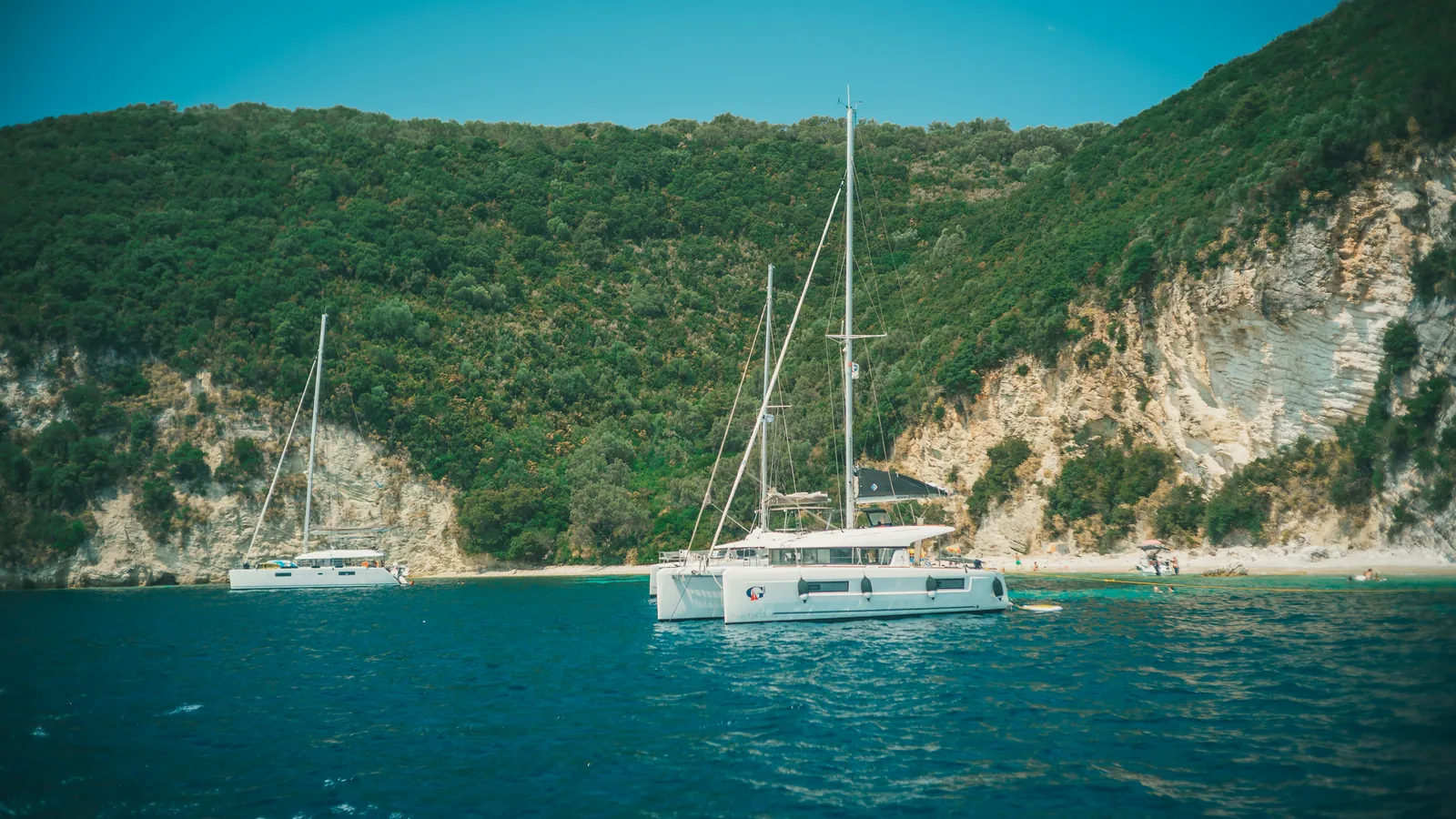
Catamaran passage planning and weather
A catamaran experiences the weather differently than a monohull. Its speed, lack of heel, and the bridgedeck between the hulls change which conditions are comfortable, which are workable, and which to wait out.
The passage-planning factors don't change (wind, seas, squalls, window length, fuel, model convergence), but their weighting does. This page covers where a catamaran is more sensitive, how to read sea state for bridgedeck slamming, and a pre-departure checklist tuned for a catamaran.
Five ways a catamaran changes the weather call.
Same factors as any passage, just weighted for two hulls, more speed, and no heel. New to the factors themselves? Start with what makes a weather window favorable.
- Speed reshapes the forecast you encounter: A cruising catamaran usually averages more speed than a comparable monohull, so it covers more ground per forecast hour. Projecting position over time matters even more. The weather you'll actually encounter is further along the route than a slower boat would reach.
- Bridgedeck slamming makes period king: Short, steep seas slam the underside of the bridgedeck: loud, jarring, and hard on the boat. Wave period and steepness matter more than on a monohull. A tall but long-period swell can be far kinder than a modest, short-period sea.
- Less heel means gusts load up faster: A catamaran doesn't spill a gust by heeling the way a monohull does, so apparent loads build fast. Reef earlier, and treat the gust forecast, not just the average wind, as a primary input.
- Motion is quicker, not deeper: A catamaran rolls less but moves with a faster, snappier motion. Beam and quarter seas are generally comfortable. Short cross-seas and bridgedeck slams wear crew down, so sea-state quality matters as much as height.
- Higher speed can open tighter windows: Because a fast catamaran clears the exposed stretch sooner, it can sometimes push through a shorter window a slow monohull would have to skip, provided forecast confidence holds for the entire, faster passage.
For a catamaran, the period decides the slam.
The single most useful sea-state check for a catamaran is the ratio of wave period (seconds) to wave height (feet). Short, steep seas slam the bridgedeck. Two forecasts with the same height can produce very different passages.
| Height-to-period | Example | What the ride feels like |
|---|---|---|
| ■ Short period ≈ wave height | Steep, stacked seas: the classic bridgedeck-slamming condition. Hard on the boat and miserable for crew, even at modest height. | |
| ▲ Period ≈ 2× wave height | Workable. You feel the seas and the occasional slam, but motion stays manageable for a cruising catamaran. | |
| ◆ Long period ≥ 3× wave height | Smooth, well-spaced swell. A catamaran rides these comfortably: little slamming, easy motion. |
Then check direction. Beam and quarter seas are kinder than the same seas on the bow. A separate swell crossing the wind-waves can stack into a short, slamming cross-sea that neither number predicts on its own. Read wind, swell, and wind-wave together.
A pre-departure checklist for multihulls.
The general weather window assessment routine still applies. These five steps tune it for a catamaran.
- Know your real passage speed: Plan around the speed you actually average while cruising, not the number listed in the brochure. It sets where you'll be when the weather changes.
- Watch the period, not just height: Filter for sea-state quality first. A short-period sea is the catamaran-specific red flag; long-period swell at the same height is a different passage.
- Mind the gusts and reef early: The boat won't heel to spill wind, so plan to the gust forecast and reef before high winds arrive, not after.
- Size the window to your speed: Your higher average speed can shorten the exposed window, but only if forecast confidence holds for the entire, faster passage. Keep a margin regardless.
- Re-check underway: Re-assess the remaining legs from your live position as fresh forecasts land, and keep bail-out ports and abort criteria ready.
Built around your boat's real speed.
WeatherWindow.AI reads your catamaran's own polars, which contain its projected speed relative to the apparent wind speed and direction. It factors that motion into the assessment by grading the sea state at each projected position along the route, so short, steep, beam-on seas that drive bridgedeck slamming are included in the passage's comfort rating. The result is one graded call: GO, CAUTION, MARGINAL, NO-GO, or DIVERT, with the data behind it visible. You make the final call. Planning a monohull passage instead? That guide covers how heel and rolling motion change the same call.
Catamaran passage questions, answered.
How is catamaran passage planning different from a monohull?
The factors are the same (wind, sea state, squall risk, window length, fuel, model convergence), but the weighting shifts. A catamaran's higher speed changes where it encounters the weather. Its lack of heel makes reefing discipline more critical for safety. Bridgedeck slamming makes wave period and steepness especially important. Sea-state quality, not just height, drives the call.
What sea state is bad for a catamaran?
Short, steep seas are the main concern. When the wave period in seconds is close to the wave height in feet, the seas stack up and slam the underside of the bridgedeck, which is jarring, hard on the boat, and tiring for crew, even at modest heights. Long-period swell at the same height is a far more comfortable passage.
Do catamarans need longer weather windows?
A cruising catamaran usually averages more speed than a comparable monohull, so it clears the exposed part of a route sooner and can sometimes work with a narrower weather window, as long as forecast confidence holds for the entire passage and you keep a safety margin.
How much wind is too much for a cruising catamaran?
It depends on the boat, the sails, the sea state, and the manufacturer's recommendations. There is no single number. A catamaran doesn't shed gusts by heeling, so reef early, plan to the gust forecast rather than the average, and treat building wind combined with short, steep seas as the combination to avoid.
Does WeatherWindow.AI work for catamarans?
Yes. WeatherWindow.AI projects your boat's position hour by hour using its speed relative to the apparent wind angle and speed, then assesses the forecast at each projected position along the route, surfacing wind, gusts, sea-state, and squall data including the period and steepness that drive bridgedeck slamming. You see the data and make the final call.
Keep reading.
References and further reading.
- NOAA National Data Buoy Center: How wave height, period, and steepness are derived
- UK Met Office: The Beaufort scale
- MetService (New Zealand): Sea state and swell
- Royal Yachting Association: Passage planning
WeatherWindow.AI is a decision-support tool that assesses your intended passage. It is not a weather routing service. It does not replace official marine forecasts, a professional weather router, or your judgment as master.