
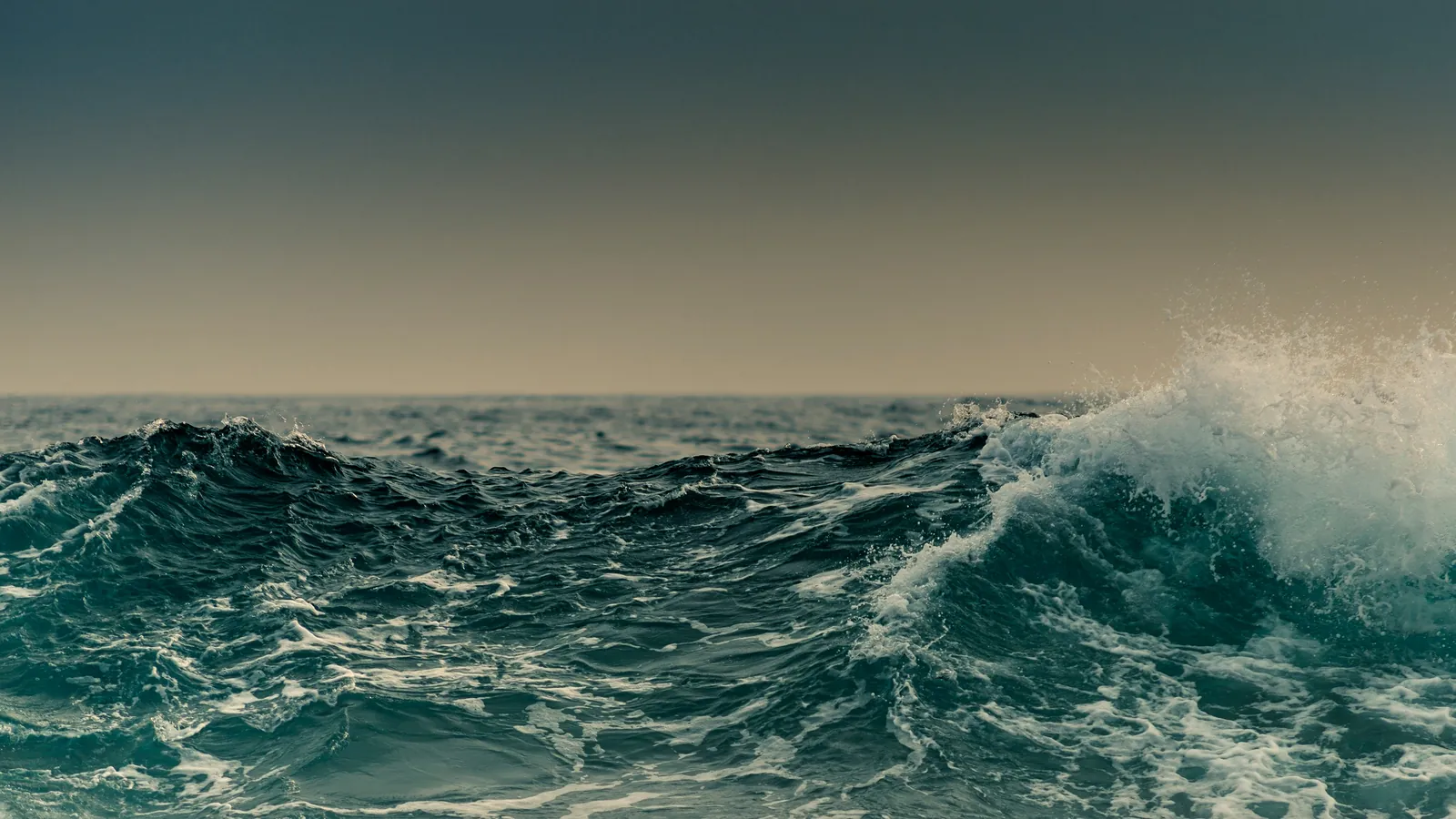
Swell vs wind waves: reading the sea state that actually matters
Wave height on its own tells you very little about how a passage will feel. What decides the comfort is the period between the waves, the direction they come from, and whether more than one wave train is running at once. The same six-foot forecast can be a gentle swell or a steep, pounding mess, and the height never indicated which one it would be.
This page breaks the sea state into the parts a sailor can read. It covers the difference between wind waves and swell, why period and direction matter more than height, what happens when two wave trains cross, and the one idea that explains why the same sea feels different depending on the boat's heading: encounter period.
Height only tells you how high. The rest tells you how rough.
A forecast hands you a wave height, and it is tempting to stop there. Don't. Height is one number out of several that decide whether that wave will be comfortable or brutal. A modest height with a short period and a sea on the bow can be far worse than a higher wave that is long and well spaced on the quarter.
So read four things, not one. How big the waves are (height), how far apart they are in time (period), where they come from relative to your course (direction), and whether you are looking at one clean wave train or several stacked on top of each other. Those four together describe the sea you will actually feel. The height by itself rarely does.
The six things that make up a sea state.
Almost every wave you meet is some combination of these. Learn to pick them apart and the forecast starts to mean something.
- Wind waves: Made by the wind blowing on the water right where you are. They are short-period, steep, and close together, and they build and die with the local wind. When the wind drops, they fade within hours.
- Primary swell: Wind waves that have traveled from a distant system. The distance they travel sorts them into long-period, organized, evenly spaced waves. Swell can arrive under a calm, clear sky with no local wind to explain it.
- Secondary swell: A second swell train from another system, often from a different direction than the wind and the primary swell. It is easy to miss on deck, but it is in the forecast, and it changes how the sea behaves.
- Period and steepness: Period is the time between crests, and it sets the steepness. A short period packs the same height into steep, punishing waves. A long period spreads it into gentle slopes. Modest height at a short period still hurts.
- Direction: The same seas are far kinder on the beam or quarter than on the bow. Direction relative to your course decides whether a wave train lifts you over it or crashes into the boat dead on and throws spray down the deck.
- Confused or cross seas: Two wave trains crossing from different directions. Where their crests line up they stack into steep, sharp peaks that are taller and more abrupt than either train alone. No single height number can predict this.
The same sea feels different when the boat is moving.
Two periods are at work, and sailors often know about only one of them. The first is wave period, the time between crests passing a fixed point. That is what the forecast reports, and it belongs to the wave train itself. It does not change with your boat.
The second is encounter period, the time between crests as your moving boat actually meets them. This one is unique to the boat. It depends on your speed and on the angle of the boat relative to the waves, and it is usually what your stomach is reacting to when you feel uncomfortable.
Picture the three cases. Sail into the seas (head seas) and you run into the next crest sooner than it would have arrived at a fixed point, so the encounter period gets shorter. The waves arrive more often, the boat has less time to recover between them, and the motion turns harsher. Run with the seas (following seas) and the crests catch up to you slowly, so the encounter period stretches out and the ride eases, though now you watch for surfing and broaching as the stern lifts. Take the seas on the beam and the encounter period stays close to the wave period, but the motion becomes roll-dominated rather than pitch.
This is why a wave period that looks acceptable on paper can still be uncomfortable when you are taking the waves on the bow, and why the same forecast feels like an entirely different sea depending on the boat and angle of the boat relative to the waves. The forecast describes the wave train. Your speed and heading decide the sea you actually experience.
The same numbers, a different passage.
A quick read on how the common sea states feel, and how much your course changes the answer.
| Sea state | Example | What the ride feels like |
|---|---|---|
| ◆ Long-period swell only | 6 ft @ 16 s, on the quarter | Smooth, well-spaced lift. The boat rides over each wave. Comfortable for most crews. |
| ▲ Moderate wind-wave on the beam | 4 ft @ 6 s, abeam | Workable but rolly. You feel every wave and the motion tires the crew over time. |
| ■ Short steep wind sea or confused cross-sea | 5 ft @ 4 s, crossing swell | Steep, stacked peaks. The boat slams, steering is constant work, gear and crew suffer. |
| ■ A sea met head-on | 6 ft @ 8 s, on the bow | Short encounter period. The boat pitches into each crest, slows hard, and throws spray down the deck. |
| ◆ The same sea, running with it | 6 ft @ 8 s, dead astern | Long encounter period. The crests pass slowly, the boat lifts and settles, the ride is gentle. Watch for surfing. |
The last two rows are the same wave train and the same height. Only the apparent wave angle changed, and with it the encounter period and the whole character of the day.
Reading the entire sea, not just the height.
WeatherWindow.AI reads the sea state train by train. It looks at the individual wave trains and their steepness, works out the cross-sea geometry where a swell crosses the wind waves, and accounts for the encounter period along your actual course and speed, then folds all of that into a single graded call for each point on your route. A long, well-spaced swell on the quarter reads GO; a steep, short-period, confused, or head-on sea pushes the same waves toward CAUTION or NO-GO. You see the wind and waves behind every call, and you make the final decision.
Sea state questions, answered.
What is the difference between swell and wind waves?
Wind waves are made by the wind blowing on the water right where you are. They are short, steep, and close together, and they build and die with the local wind. Swell is what is left after wind waves travel out from a distant weather system. The distance sorts them into long, smooth, evenly spaced waves that can arrive under a clear sky with no wind at all. On most passages you meet both at once, often from different directions.
Why does wave period matter more than wave height?
Period is the time between crests, and it tells you how the height is spread out. Two seas of the same height ride completely differently depending on period. A short period packs the same height into steep, close walls of water that slam into the boat and affect the crew. A long period spreads that height into gentle slopes the boat rides over. So height tells you how big, and period tells you how rough. Read them together, and the period usually decides the day.
What is encounter wave period?
Wave period is measured at a fixed point. Encounter period (apparent wave period) is the time between crests as your moving boat actually meets them, and it depends on your speed and the angle you take the seas. Sail into the seas and you run into crests sooner, so the encounter period gets shorter and the motion turns harsher. Run with the seas and the crests catch up slowly, so the encounter period stretches out and the ride eases, though you watch for surfing and broaching. On the beam, the encounter period is close to the wave period and the motion is mostly roll.
Why does the sea feel different from what the forecast said?
The forecast reports the wave train. What you feel is the encounter, and that depends on your boat, your speed, and your heading. The same forecast pounds when you punch into it and eases when you run with it, because your course changes the encounter period. On top of that, a forecast height is often a mix of more than one wave train, so a swell crossing the wind waves can stack into peaks that no single height number predicted.
What is a confused or cross sea?
A confused or cross sea is two or more wave trains running at the same time from different directions, usually a swell from one system crossing the local wind waves. Where the crests line up they add together into steep, sharp peaks that are taller and more abrupt than either train on its own. The pattern is irregular and hard to anticipate, which makes steering tiring and the motion jerky even when the reported height looks modest.
Can the sea be rough under a clear sky?
Yes. Long-period swell can travel thousands of miles from a distant storm and arrive under a calm, clear sky with no local wind to explain it. It often looks gentle from the deck because the waves are smooth and far apart, but in shallow water or against a current it can steepen fast and break heavily. A sunny day is no guarantee that the seas will be calm.
See how sea state fits the full go-or-wait call. Read what a weather window is →
Keep reading.
References and further reading.
- UK Met Office: Beach forecast and tide times explained
- TU Delft, Coastal Dynamics (LibreTexts): Sea versus swell waves
- NOAA NDBC: How are estimates of wind-seas and swell made from NDBC wave data?
- NOAA NWS: Significant Wave Height
WeatherWindow.AI is a decision-support tool that assesses your intended passage. It is not a weather routing service. It does not replace official marine forecasts, a professional weather router, or your judgment as master.